
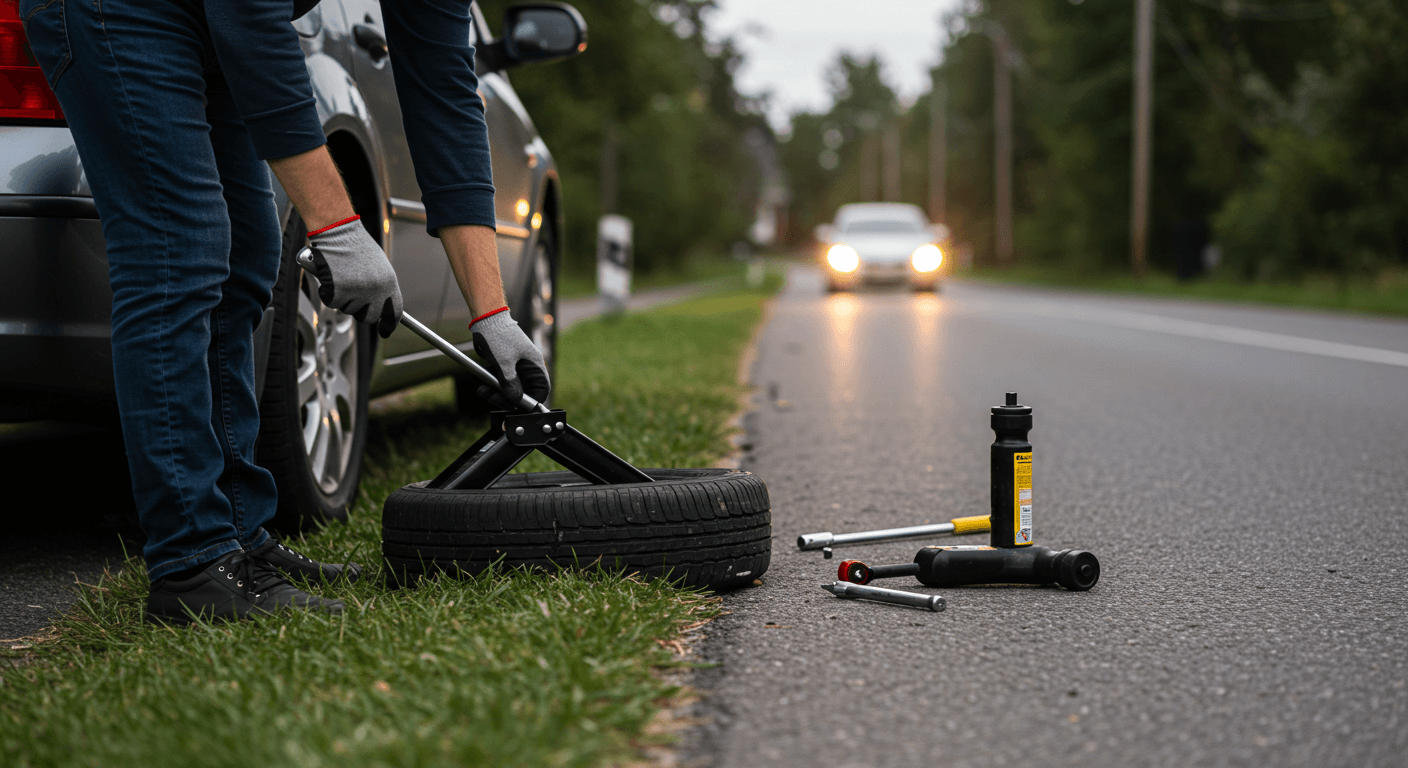
Picture this: You’re cruising down the highway, music playing, coffee in the cup holder — when suddenly, your car starts to pull to one side. The ride feels bumpy. You pull over, hop out, and there it is: a flat tire.
If you’ve been driving long enough, chances are this moment (or one like it) has happened to you — or will. But the good news is: you can handle it. With the right steps and a bit of know-how, changing a flat tire can be a safe, manageable task — even if you’re not particularly car-savvy.
Let’s walk through how to change a flat tire the smart, safe way.

Why Do Tires Go Flat?
Tires don’t just give out for no reason. Most flats come from one of a few common causes:
Punctures from nails, screws, or other road debris
Hitting a pothole or curb too hard
Worn-out tread that’s no longer road-safe
Underinflation, which increases wear and tear
Valve stem failure, which can let air leak slowly
According to AAA, tire issues are one of the most frequent reasons for roadside assistance calls — accounting for nearly 1 in 5 calls. The reality? Most flats are preventable with regular tire checks and maintenance. But when one does happen, being prepared can make all the difference.
Safety First: What to Do When You Get a Flat
Before you grab the jack, the most important thing is staying safe. Here’s what to do immediately after realizing you have a flat:
1.Don’t slam on the brakes. Gently ease off the gas and steer your car to a safe spot.
2.Look for level ground. A flat, stable area away from traffic — like a wide shoulder or parking lot — is ideal.
3.Turn on your hazard lights. This alerts other drivers that you’re dealing with a roadside issue.
4.Apply the parking brake. This helps keep your car from moving while you’re working.
5.Use wheel wedges (if you have them). Place them behind the tires opposite the flat one to prevent rolling.
Real-life tip: One of our readers shared that she kept an old yoga mat in her trunk to kneel on while changing her tire — a small comfort when you’re working on asphalt!
Tools You’ll Need (And Should Keep in Your Car)
You don’t need a full garage’s worth of tools to change a tire — just a few basics:
Spare tire (check it’s properly inflated)
Car jack (usually located in the trunk or under the cargo floor)
Lug wrench (often included with your jack)
Flashlight (if it’s dark)
Tire pressure gauge
Gloves and towel (optional, but helpful)
Many cars come with these tools, but it’s worth checking before you actually need them. Some newer vehicles don’t come with a spare at all — they rely on tire repair kits instead.
Step-by-Step: How to Change a Flat Tire
Now that you’re parked safely and have your tools ready, let’s get into the step-by-step process. Take your time — slow and steady wins the race here.
1. Loosen the Lug Nuts (But Don’t Remove Them Yet)
Using your lug wrench, turn the lug nuts counterclockwise until they’re loose. This can take some force — you might need to brace yourself or use your body weight.
Pro tip: If the nuts are stuck, try standing on the wrench arm carefully for more leverage.
2. Position the Jack and Lift the Car
Find your vehicle’s jack point — usually behind the front tire or in front of the rear tire — and place the jack underneath. Slowly raise the car until the flat tire is about 6 inches off the ground.
Safety tip: Never put any part of your body under the vehicle while it’s raised.
3. Remove the Flat Tire
Now fully unscrew and remove the lug nuts. Pull the flat tire straight off. Lay it flat on the ground to prevent it from rolling.
4. Mount the Spare Tire
Line up the holes in the spare with the wheel bolts and slide it onto the hub. Replace the lug nuts and tighten them by hand first.
5. Lower the Car and Tighten Lug Nuts
Use the jack to slowly bring the car back down. Then, tighten each lug nut in a crisscross pattern — this ensures even pressure.
How Long Can You Drive on a Spare?
Most spare tires (also called “donuts”) are designed for short distances only — around 50–70 miles, and not faster than 50 mph.
Full-size spares can last longer, but you’ll still want to get your regular tire repaired or replaced ASAP. Don’t forget to check the pressure on your spare before driving off.
What to Do After You’ve Changed the Tire
Once you’re safely back on the road, make these next steps a priority:
Check your tire pressure — including the spare
Visit a tire shop within a day or two for a proper inspection or repair
Replace or repair your flat as soon as possible
Restock your trunk with any tools or gear you used
One driver we spoke to keeps a mini compressor in the trunk to top off air in their spare — a great tip for peace of mind.
When to Call for Help
Sometimes, changing a tire yourself isn’t the safest option. Call roadside assistance if:
You’re on a narrow shoulder or unsafe area
It’s dark, stormy, or low-visibility
You don’t have the right tools
The lug nuts are too tight or rusted
You’re physically unable to do the work
There’s no shame in asking for help — it’s about keeping yourself safe.
Preventing Flats in the First Place
Here are some smart habits to help you avoid a flat altogether:
Check tire pressure monthly (use your owner’s manual for the recommended PSI)
Inspect tread depth — replace tires when they’re below 2/32 of an inch
Rotate your tires every 5,000 to 7,000 miles
Avoid potholes and road debris when possible
Even five minutes a month can save you from an hour on the roadside.
Final Thoughts: You’ve Got This — And We’ve Got You
Changing a flat tire isn’t something anyone looks forward to. But with a calm mindset, the right tools, and a bit of know-how, it’s something you can handle — safely and confidently.
At Budget Insurance Agency, we know that road safety goes far beyond insurance coverage. It’s about empowering drivers with the knowledge to stay safe and prepared for whatever the road brings. Whether you’re a new driver or have years of experience under your belt, having a trusted insurance partner in your corner makes a world of difference.
Need auto insurance that fits your life and budget?
Add a Comment